+91 8928483369 sales@bluewello.com
Winter sale discount off 50%! Shop Now

Sale
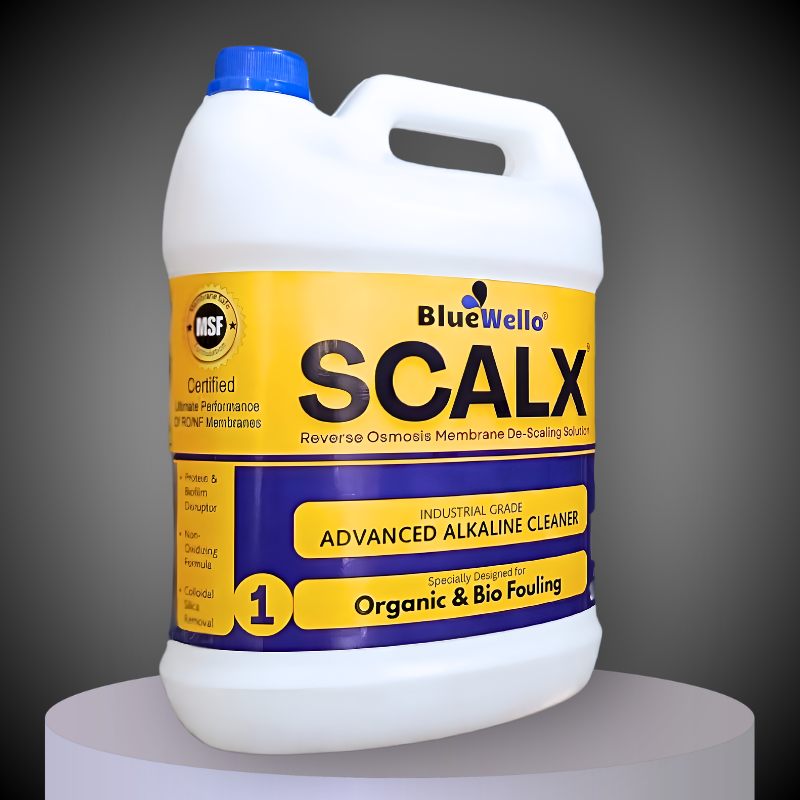
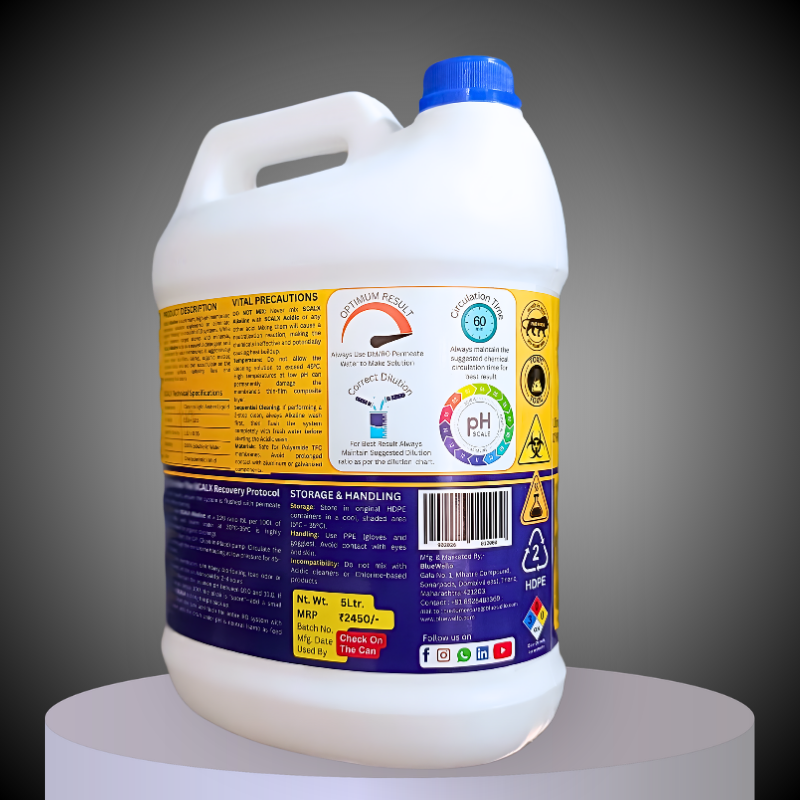
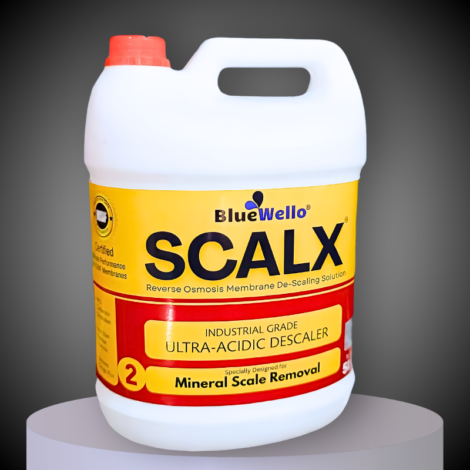
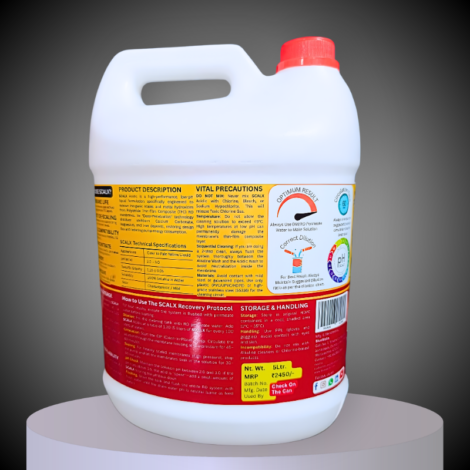
Scalx Ro De-scaling Alkaline
Price range: ₹2,169.00 through ₹21,683.00
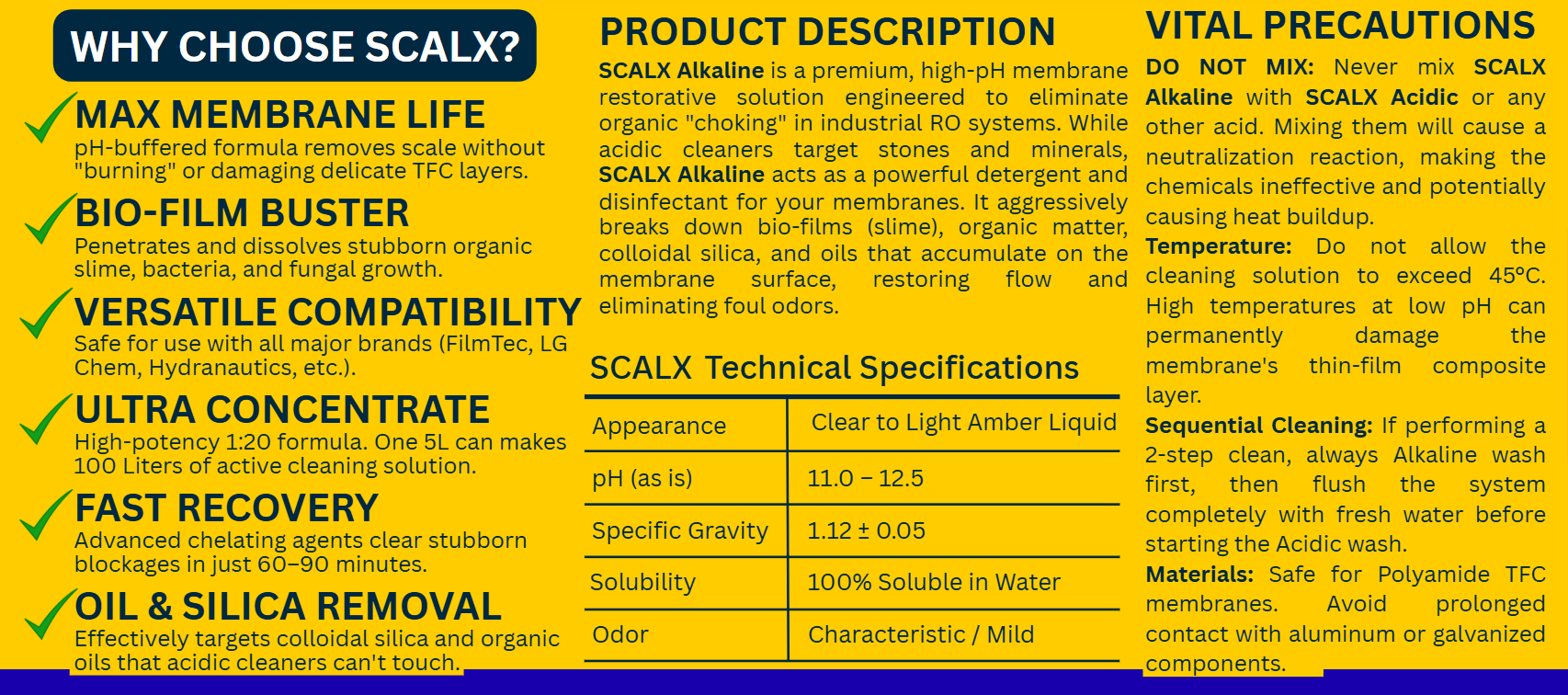
While acidic cleaners target mineral “rocks,” our RO Descaling Alkaline Blend is engineered to tackle the “slime.” This high-pH formula is specifically designed to dissolve organic matter, biological films (bio-fouling), and oils that compromise membrane flux and water quality.
Description
📝 Product Description: RO Descaling Alkaline
This is a high-pH cleaning chemical specifically formulated to remove organic matter, biological slime (bio-fouling), and oils from RO membranes. While your acidic cleaner handles the “rocks” (minerals), this alkaline cleaner handles the “slime.”
NaOH (Caustic Soda): Raises the pH to break down organic fats, oils, and biological films.
EDTA: Acts as a stabilizer and helps pull away any remaining metal ions trapped in the organic layers.
✅ Advantages
Bio-Fouling Removal: It is the best way to kill and remove bacteria, fungi, and algae slime that clogs membrane pores.
Effective on Organics: Breaks down humic acids, oils, and other organic contaminants that acidic cleaners cannot touch.
Colloidal Cleaning: Very effective at removing fine silt and clay particles (colloids) that stick to the membrane surface.
Restores Flux: By removing the “slippery” organic layer, it significantly improves the water production rate.
🛠️ How to Use (The Alkaline Wash)
Note: Usually, an Alkaline wash is done after an Acidic wash if the system is heavily fouled.
Preparation: Fill the CIP (Cleaning In Place) tank with RO permeate water.
Dilution: Mix the chemical to create a 1-2% solution.
pH Check: Ensure the pH of the solution is between 11.0 and 12.0.
Warning: Never exceed pH 12.5, as it can damage the glue line of the membrane.
Temperature (Optional but Recommended): Alkaline cleaning works much better if the solution is slightly warm (around 30°C – 35°C). Do not exceed 40°C.
Recirculation: * Circulate for 45–60 minutes.
Soak for 30 minutes if the bio-fouling is severe.
Circulate again for 30 minutes.
Flushing: Flush the system with RO water until the drainage water shows a neutral pH (around 7).
❌ Disadvantages & Risks
High pH Hazard: NaOH is highly caustic. It can cause severe chemical burns to the skin and eyes.
Slippery Residue: This chemical makes surfaces very slippery; any spills must be cleaned immediately.
Membrane Compatibility: If left inside the membrane for too long at a very high pH, it can weaken the membrane structure.
Hard Water Interaction: If you dilute this with hard water (instead of DM water), the NaOH might react with the hardness and create more scale. (Using DM water, as you mentioned, is the correct way).
Storage & Handling
Keep the container tightly closed away from direct heat and sunlight. Wear rubber gloves goggles and shoes when handling. Do not get in eyes on skin or on clothing. In case of contact wash with plenty of fresh cold water if necessary seek medical attention.
💡 Pro-Tip for You:
Always perform the Acidic Wash first to remove the mineral “shell,” and then perform the Alkaline Wash second to sweep away the organic matter underneath. This “Two-Step” process is the industry standard for a like-new membrane.
Additional information
| Weight | N/A |
|---|---|
| Dimensions | N/A |
| Available Quantity | 5 Kg, 25 Kg, 50 Kg |

Reviews
There are no reviews yet.